Entangled with colonialism: Finnish macronationalism in travel literature
 Reactions count: 0
 Comment count: 0
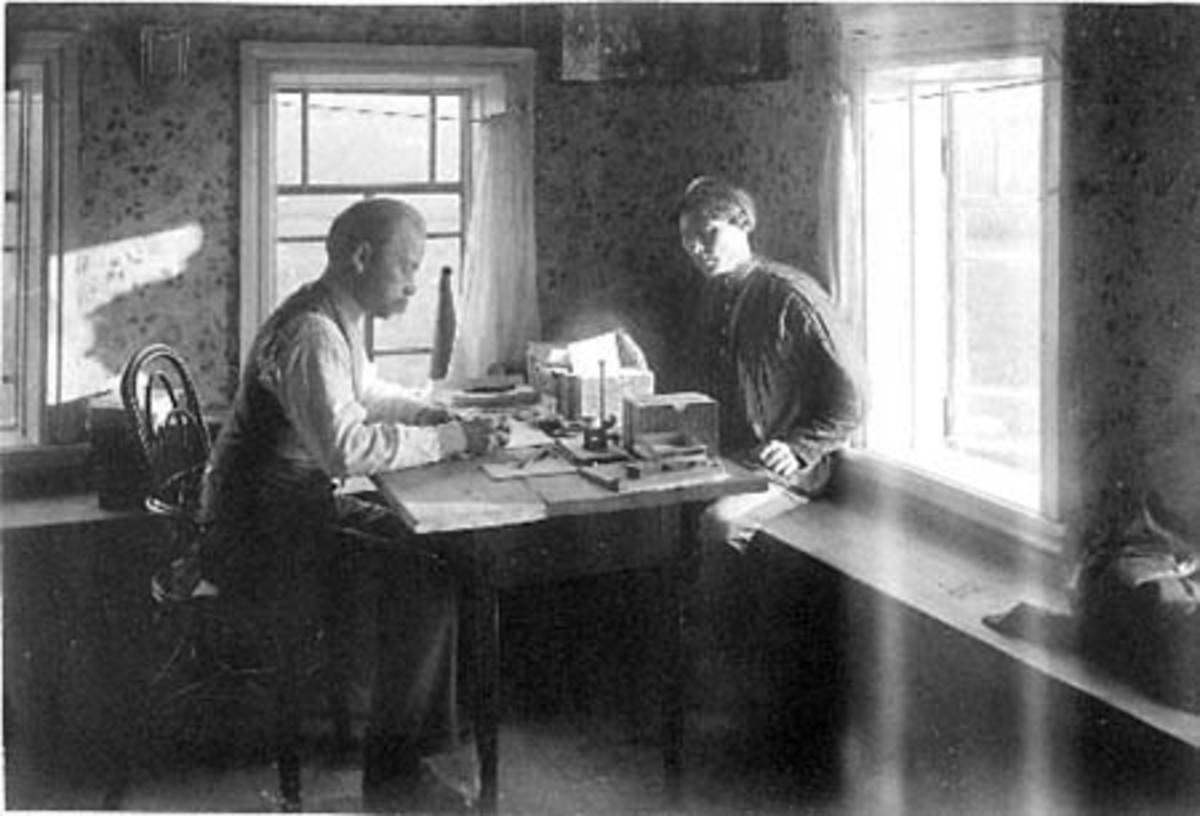
The symbolic foundations of Finnish nationalism are often depicted around traditions collected amongst Finnish or Karelian peasants. However, Finnish researchers also constructed images of the Finnish nation in relation to Finno-Ugric speaking minorities spread across Russia. The travelogues written by researchers working with West Siberian natives at the turn of the 19th and 20th centuries reveal not only national but also colonial imaginations, which built systematic cultural, historical and racial hierarchies between Finns and their linguistic relatives. While exposing such a colonial gaze might cause anxiety, the feeling should not lead to the denial of this uncomfortable history. Rather, we should find more responsible ways of reading accounts of it. This strategy can help to dismantle colonial images and avoid reproducing unequal structures, writes Karina Lukin.
Some 20 years ago, I was conducting ethnographic field work among the Nenets, an Indigenous community living in Arctic Russia. Coming back from the field, a senior scholar lauded me for so bravely following in the footsteps of M. A. Castrén, a nationally celebrated figure, one of the forefathers of linguistics, ethnology and folklore studies in Finland.
My senior colleague obviously wanted to encourage me, but I was horrified. My intense terror mainly arose from the national romantic aspirations important to Castrén, but extrinsic in my case. Additionally, the way Castrén described Siberian natives seemed to me an exemplar of the kind of colonial othering criticised in social anthropology classes and course books.
While the work of Castrén and his fellow scholars has been celebrated both as nationally important and as inspired by national romanticism, the colonial tones of their writings have not gained equal attention. Yet, the intense entanglement of national and colonial aspirations makes them not only fascinating but also a source of anxiety.
Discussing coloniality in a national context does not sit easily in the dominant history narratives taught in Finland. Therefore, it can be a source of uncomfortable feelings and difficult to even understand. Whereas the national historiography has emphasised Finns as either victims of Russian colonialism and oppression or as sincere spokespersons for other Finno-Ugric peoples, colonial interpretations highlight those Finnish practices and discourses that render Finnish researchers as reproducers of inequalities.
Lately, I have worked with travel notes written by Castrén and his followers. Their texts rest on all these moral stances and ideologies, which reproduce hierarchies between Finns and Finno-Ugric peoples. Therefore, the question is not so much about if colonialism is tied to Finnish nationalism. Rather, contemporary readers should ponder how they themselves relate to the ideological legacies of Finnish travel writing.
**
After Castrén’s expeditions in Siberia, half a dozen other Finnish scholars conducted field work in Arctic Russia and Western Siberia at the turn of the 19th and 20th centuries. They all aimed to map and describe Finno-Ugric minority languages and their speakers’ customs and everyday practices.
These expeditions, together with those made among speakers of Finno-Ugric languages in the western parts of the Russian Empire, formed one of the largest and most ambitious scientific endeavours of the Grand Duchy of Finland. The male travellers aspired to document the history of the Finno-Ugric peoples through sources such as language, folklore, customs and material culture. They worked on macronational schematisations, which, as Joep Leerssen has noted, were logical extensions of nationalist thinking yet did not strive to become politically realised.
Beyond their linguistic, ethnological and folkloristic interpretations of the peoples they encountered, most of the men also published travel records, diaries or travelogues either during or after their expeditions. These texts, characterising the nature of the field work and the societal setting in which the men operated, were read and enacted at the meetings of the Finno-Ugrian Society funding most of the expeditions.
The Finnish reading of the travel literature has tended to reimagine the men as national heroes in ways that follow the manners in which the texts likewise portrayed the figures as adamant and wise researchers. For example, the men’s courage, resilience and resourcefulness during their expeditions have long been admired. It is not uncommon for subsequent researchers to have repeated the narratives about the hardships of not only getting around in demanding environmental conditions but also of working with reluctant natives.
What this interpretation misses, though, is a critical analysis of the politics surrounding the creation of these leading men and the Finnish nation. The act of elevating Finnishness and denigrating the natives was the point of friction that caused me such unease some 20 years ago.
Colonialism is deeply entangled with nationalism at this point of friction. The coloniality of Finnish nationalism emanated from macronational imaginations. The male travellers described the speakers of the Finno-Ugric languages as forming a landscape of relatives who shared roots in the imagined Urheimat and a history of migration from East to West. While linguistics provided systematic theory and methods proving the relations between the languages, typologies and comparisons of folklore, religion and material culture further consolidated the picture.
The constellation came to be called a Finnish or Finno-Ugric family, and its members were tribes. The tribes, though, were not equally placed in this constellation; rather, their positions tended to resonate with hierarchies spanning different geographies and temporalities. Hence, like ethnographic practices in colonial settings elsewhere, Finnish travelogues described the Siberian natives not only as spatially but also as temporally distant from the modern and progressive Finnish nation. In the texts, the contemporary bodies and manners of the Siberian natives represented early and primitive stages of the Finnish past. In other words, even though they also lived in the Russian Empire, sharing a concurrent societal space, they were depicted as ancient and nonsimultaneous with the Finns.
In picturing the related natives as primordial, Finnish researchers simultaneously wrote themselves as civilised and European. They were representatives of a people able to develop and possibly worthy of a nation-state. Moreover, it was the duty of the Finns to continue Finno-Ugric research because the other tribes, aside from the more advanced Hungarians and Estonians, could not progress.
In the travel literature, the need for hierarchical differentiation is reflected in, for example, the constant tendency to pay attention to that which is already a priori considered ancient, original or primitive. The men are consistently looking for archaic forms of language, material culture and folklore. In practice, this meant that they searched for interlocutors whose speech or traditions did not contain too many Russian loans, which were considered signs of the deterioration of the imagined authentic language and culture. They travelled far and wide and longed for even further to access regions that had not been touched by anyone else. They rejoiced at the beauty of the villages and of people who had had minimum contact with Russian settler colonialists.
To phrase it in another way, they despised the effects of centuries-long interactions between Russian colonisers and the natives and systematically did not record those forms of language or culture that would reveal anything about shifts, changes and processes of modernisation. Such selective efforts were part of the professional skills of the researchers.
The result was a coherent map of related communities imagined in temporal order on the ladder of civilisation. The high status given to Finns in this hierarchy correlated also with power. For the researchers, the power of the Finns meant they had an obligation and burden to speak for those lower down in the hierarchy. Such a depiction of relations is part of a deeply colonial constellation.
In dismantling the colonial modes and legacies of Finnish Siberian travel literature, I have aimed to push past the kinds of simple dichotomies related to victimhood, oppression and disenfranchisement that inform the travel literature and our current ideas about Finnish research on Finno-Ugric peoples. In practice, this has meant treating the colonial tones as inevitable feature of the early 20th-century travel literature and directing attention to the inequalities they helped create and maintain. Secondly, I have read the texts ‘against the grain’, looking for the experiences and interpretations of the natives, which often challenge their alleged backwardness and helplessness. Instead, the texts also depict modern and resourceful natives, skilfully surviving in the Russian imperial Arctic environment. Thirdly, I have mediated on how we should today relate to the legacies of racial and cultural inequalities produced in the texts so that instead of the repulsiveness of merely following in their footsteps, it is important to acknowledge the significance of the pace and the whereabouts of other paths.
In other words, I am looking for more responsible ways of reading, interpreting and relating to these texts today in a manner that does not reproduce the structures of inequality. Such an approach would allow me to relate to the researchers’ points of view and to those of the Russian colonisers and the natives together with subsequent interpretations. It includes being aware of the fact that in doing internationally relevant research, the Finnish travellers not only participated in broader scientific discussions but also its values and ideologies. Additionally, the responsible reading requires that readers ponder whether the Finnish nation still needs to depict the Siberian natives as small, disappearing, traditional and unchanging. Or could we Finns relate to them as coeval human beings similarly important and worthy of respect as other peoples in the modern world?
References:
Fabian, Johannes. Time and the Other: How Anthropology Makes Its Object. Columbia University Press, 1983.
Leerssen, Joep. “Quixotic? Not Quite. The Context, Agenda and Legacy of Macronational Movements.” In Nordic Experiences in Pan-Nationalisms, 1st ed., edited by Peter Stadius and Ruth Hemstad. Routledge, 2023. https://doi.org/10.4324/9781003372202-2.
Pratt, Mary Louise. Imperial Eyes: Travel Writing and Transculturation. 2nd ed. Travel Writing and Transculturation. Routledge, 2008.