


Everyday Practices of Nationhood: A Historical Approach
 Reactions count: 0
 Comment count: 0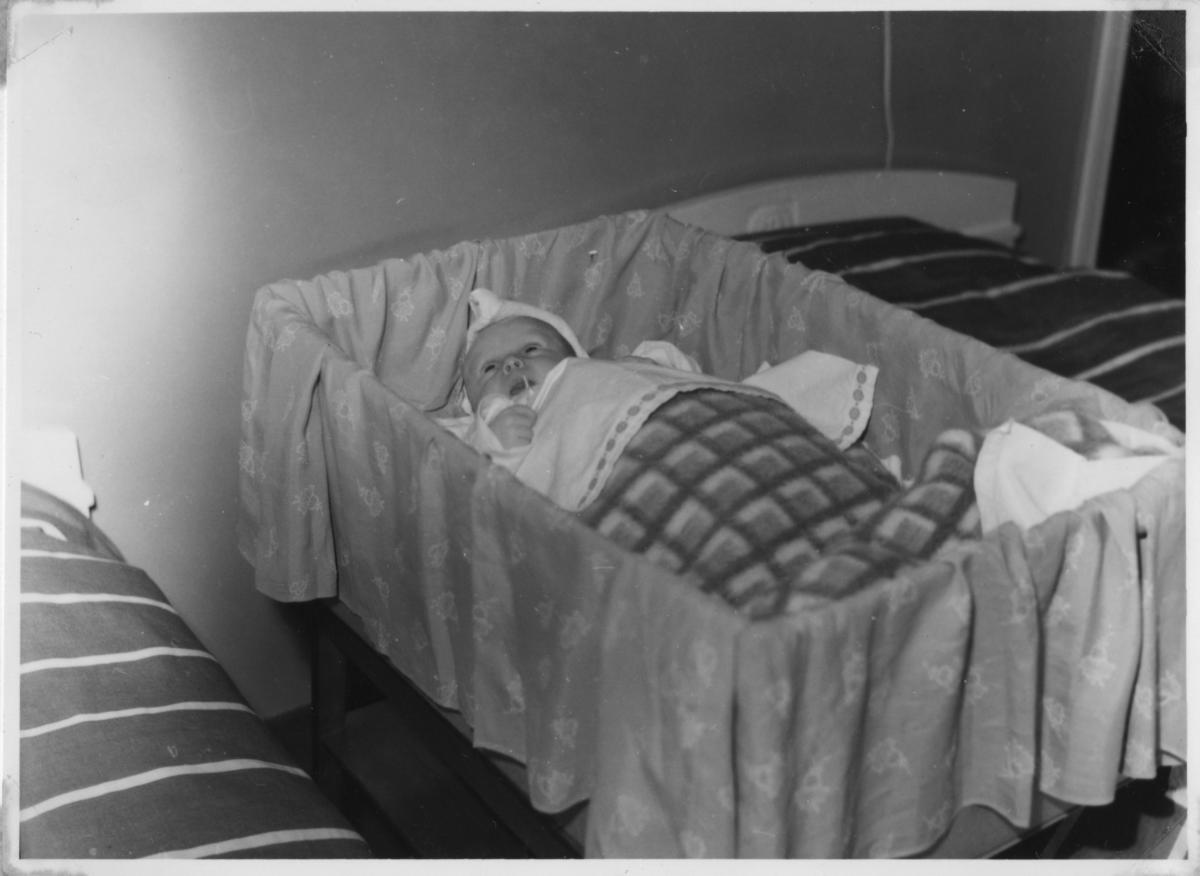
“We were entitled to this benefit because I had visited the maternity clinic as soon as I was sure I was pregnant. The rule is that, in order to receive the maternity benefit, you have to visit the clinic before the end of the fourth month of pregnancy. The box would become the first bed for our baby. Early on, I have made the bed ready. I have sewn a ruffle to the box from a white lace curtain. So this maternity package came already during the pregnancy a concrete, tangible thing, through which the whole maternity care became an integral part of Finnish families with children and women’s health. Those ruffles I now touch with my hand and listen carefully the baby moving inside me.”
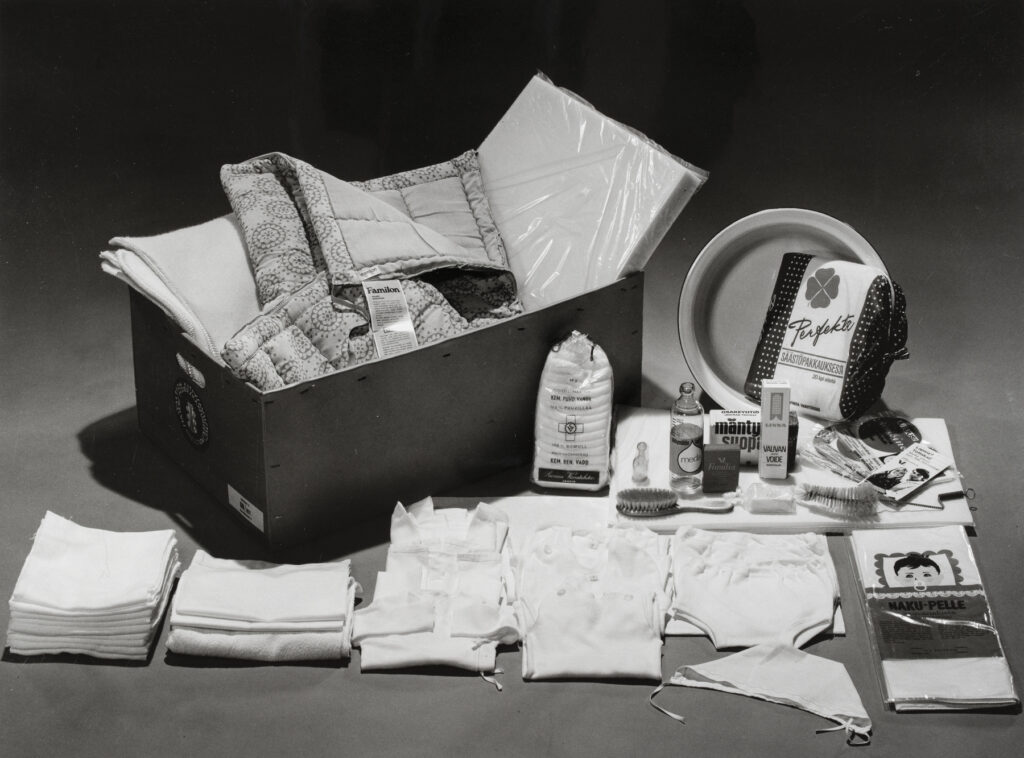
The author of this text is a woman, who had her first child in 1967 and who wrote about the event decades later in 2020. She is describing the “maternity package” or “baby box” that the Finnish state has been providing for families ever since the passing of the Maternity Grants Act in 1937. The baby box is a collection of items for the new-born and the mother and they come in a box big enough to be used as the first bed for the baby. This brief text demonstrates how everyday life, even its most intimate and private spheres of parenthood, family and home, is intertwined with the frameworks of nationhood. For me, this excerpt and other similar written reminiscences serve as an invitation to think about everyday nationhood and nationalism in historical ways.
Why should historians engage with the concepts of everyday nationalism and nationhood? There are many reasons and ways to do so. Who would be better equipped than historians to analyse the processes and periods of heating and cooling of nationalism in societies “so that we can better understand why particular symbols, practices or objects fade from scrutiny or, alternatively, begin to generate more passionate outbursts”, as recently outlined by Michael Bollig and Michael Skey. So far, the main focus of the research under the label of everyday nationalism has been contemporary and has often relied on individual cases over relatively short timespans of investigation. Historians’ approach focusing on identifying changes and continuities, also subtle ones, over longer periods of time can contribute significantly to enriching this perspective. Exploring the shifting processes of heating and cooling of nationalism is one important consideration; the other task is to demonstrate the fluctuating nature of everyday nationalism itself. Its practices are equally variable and bound to the social, cultural, political and material contexts of each era.
While some historians have asked and answered the question of what the nation meant to ordinary people, there remains much to be said about how the nation has worked as part of the changing frameworks of everyday. Or to turn the question around, there remains much to be said about how everyday has worked as part of the process of nationhood and nationalism in different times. We need to develop a historically grounded and socio-materially oriented approach that emphasizes how national meanings were afforded and contested in people’s encounters with the different institutions, practices and spaces of everyday. For instance, the interlinked sites of welfare, childhood, and care are all areas of everyday that have so far been relatively little explored from a historical perspective in relation to the everyday nationalisms of the twentieth century.
My opening quotation is not strikingly nationalist. When viewed together with other similar descriptions, the practices of infant care, parenting choices, encounters with midwives and the antenatal and child clinics surface as sites of everyday nationalism related to the welfare (state). The source type, a written reminiscence, adds another dimension. Through their narration, the authors reflect on practices of parenthood-nationhood at the time of narration, during the time when they became parents (or grandparents) but also in relation to the future of the nation. Everyday is a key site for separating worlds into ‘us’ and ‘them’. The author of the quote frames her own experiences with nation. Some other authors are more explicit in their construction of the national collective by drawing boundaries between ‘us’ and ‘them’, and the ‘right’ and ‘wrong’ nation-specific ways of infant care and wellbeing.
One occasionally hears the argument that the concept of everyday nationalism stretches the boundaries of nationalism too far and in the process obscures from view extreme and violent forms of nationalism. Perhaps the doubts about everyday nationalism as a research agenda derive from the fact that our contemporary societies are experiencing overtly exclusionary nationalist practices and the rise of far-right and populist nationalisms. While it is extremely important to pay attention to the present-day changing and intensifying forms of nationalism, it should not be a reason to discard the perspective of everyday nationalism and nationhood; quite the contrary. The everyday forms of nationalism persist, perhaps even intensify in unsettled times. Historians looking at periods of extreme nationalism may be interested in everyday as a site of the renewal of the extreme. In his seminal work, Michael Billig focused on the modern established postwar state, where nationalism was hidden but at the same time visible, in the unnoticed and taken-for-granted assumptions of the everyday. There is still plenty for historians to work with concerning the postwar period, but everyday nationalism as a research approach should not be delimited to settled and unheated contexts only. It can also be key to unlocking other historical periods and nationalisms.
Jon E. Fox and Cynthia Miller-Idriss point out how the nation “is often found doing double duty alongside religion, ethnicity, civilization, and, increasingly, ‘race,’ lending them their national credentials to collaborate in and even validate their exclusionary work”. In the same reflective article, J. Paul Goode urges scholars of everyday nationalism to be more comparative across contexts, and to contrast everyday nationalizing practices with globalizing or anti-national practices. We should not impose (everyday) nationalism on everything but as the nation is embedded in everyday practices and frameworks of experiencing, or “doing double duty”, we should continue to pay close attention to its expressions. Particular attention should be paid to how everyday nationalism is formed relationally.
References
Billig, M. (1995). Banal nationalism. Sage.
Billig, M., & Skey, M. (2026). Banal Nationalism, 30 Years On—A Review. Nations and Nationalism, 32(1), 9–17. https://doi.org/10.1111/nana.70015
Stroup, D. R., Trošt, T. P., Goode, J. P., Chandra, K., Fox, J. E., & Miller-Idriss, C. (2026). Exchange: What Can We Learn from Two Decades of Everyday Nationalism? Nationalities Papers, 1–25. https://doi.org/10.1017/nps.2026.10158
Vahtikari, T. (2026). The Maternity Package and the Materialized Experience of the Finnish Welfare State since the 1930s. Journal of Modern European History, 24(2), 260–276. https://doi.org/10.1177/16118944261439743
Van Ginderachter, M. (2019). The Everyday Nationalism of Workers: A Social History of Modern Belgium. Stanford University Press.
Yuval-Davis, N. (2000). Citizenship, territoriality and gendered construction of difference, in: F. Isin (Ed.) Democracy, citizenship and the global city (Routledge), 171–188.


The post has no comments. Be the first to comment!