


Why Do We Need Nationalism Studies?
 Reactions count: 0
 Comment count: 0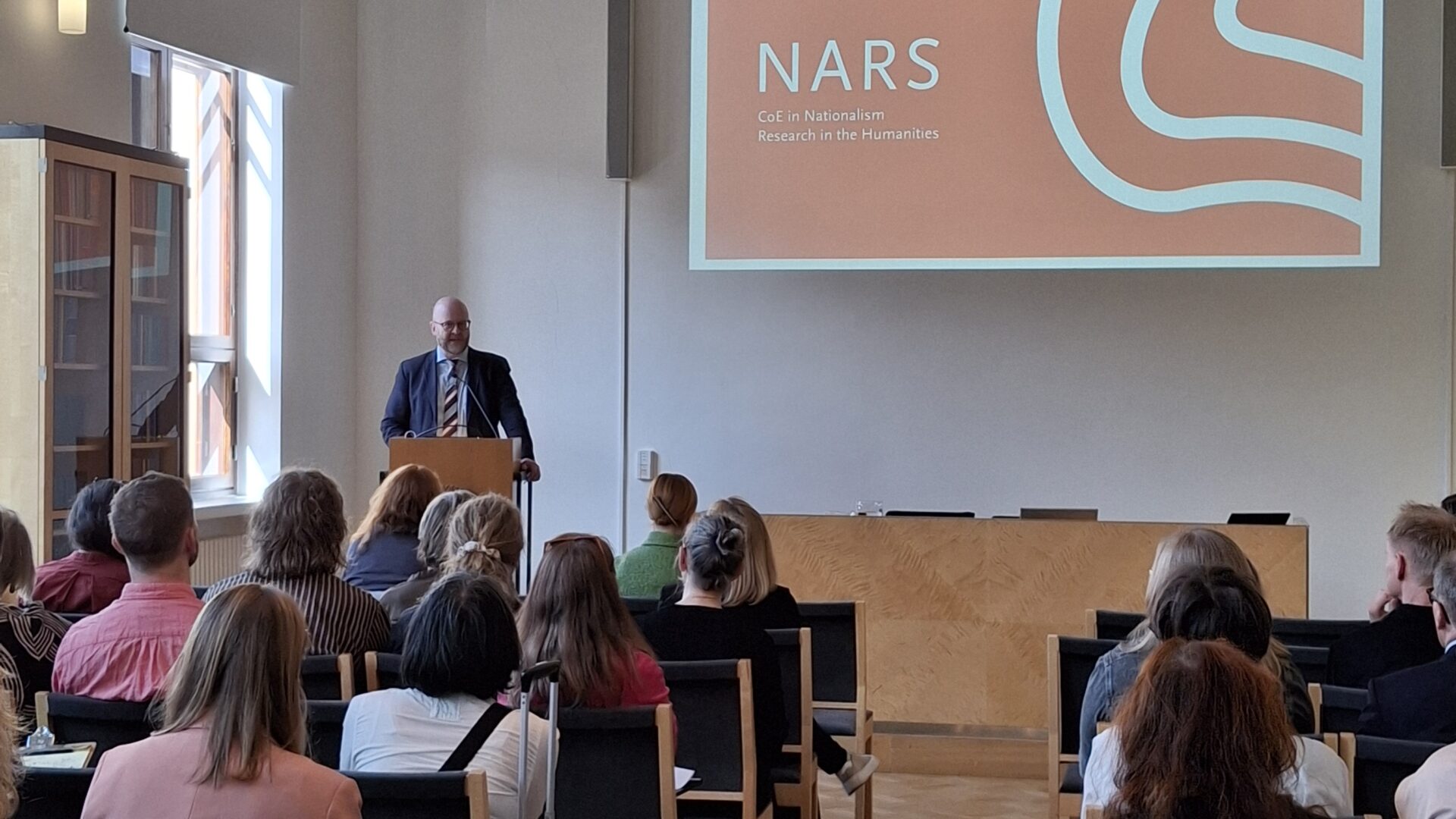
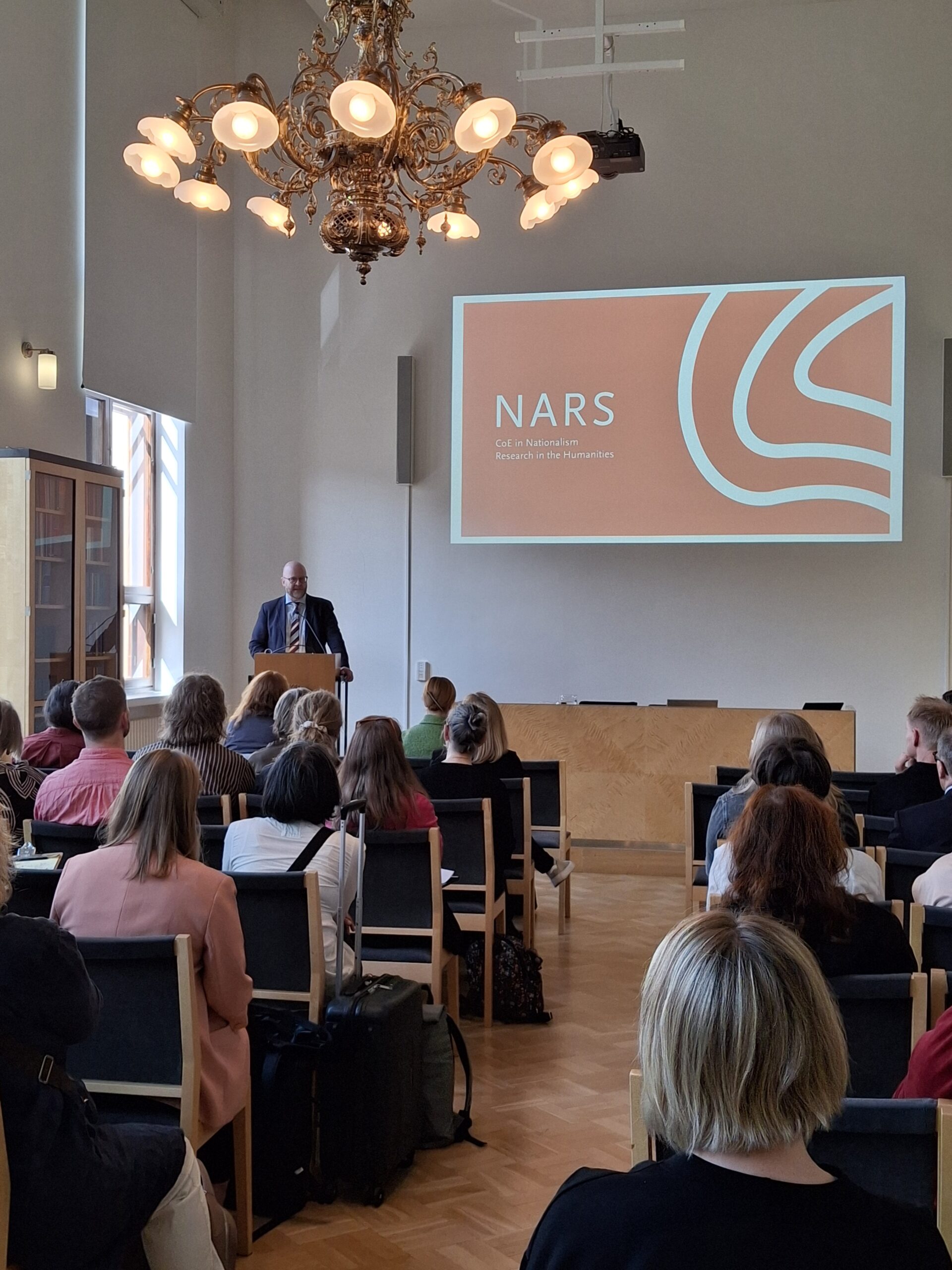
The Centre of Excellence in Nationalism Research in the Humanities, funded by the Research Council of Finland and launched at the beginning of this year, held its international opening event in May 2026. The Centre represents a major financial investment: the Research Council of Finland is funding it with more than one million euros annually over an eight-year period, while the Finnish Literature Society, the University of Helsinki, Tampere University, and Åbo Akademi University are all making substantial additional contributions. This is a major national investment in the humanities and in nationalism studies. What, then, is the basis for this research need, and from what starting points does the Centre of Excellence set out?
When the new wave of nationalism studies gained full momentum in the 1980s, the 1964 book Nationalism: Problems Concerning the Word, the Concept and Classification by the Finnish pioneer of the field, Professor Aira Kemiläinen, appeared in the bibliographies of nearly all major works on nationalism. Kemiläinen titled the first chapter of her book “Nationalism – A Confusing Word.” By this, she referred to the many different phenomena and meanings encompassed by nationalism – meanings whose number has only multiplied over time. Nationalism may refer, among other things, to chauvinism, an idea or ideology, a political movement, national spirit, a mode of thought, a historical period, or a theory. Nationalism is easy to recognize, yet more difficult to define.
From the perspective of nationalism studies, Kemiläinen still poses a remarkably timely problem. Alongside and overlapping with nationalism, we speak of nationality, nationhood, patriotism, and, for example, the lived experience of the nation. Nationalism can be located in political rhetoric, everyday practices, mentalities, and even material objects. It is like a drop of ink falling into a glass of water: it colours everything, yet afterwards it becomes almost impossible to return it to any clearly identifiable previous form. Nationalism continues to shape our lives in fundamental ways in the 2020s, and we need active reflection and research on its meanings and its many different manifestations.
Precisely because nationalism seems to be everywhere, and because the term refers to phenomena operating on very different levels, it is particularly important to seek to identify its boundaries as well as variations in its character, intensity, and operation. This kind of research – attentive to shifting meanings and contexts – is something in which scholars in the humanities have traditionally excelled. It also requires conceptual reflection. Are all the phenomena we study actually forms of nationalism, even when they clearly relate to nationality, ethnicity, and nationhood? Is nationalism always necessarily the best interpretive framework through which to explain the phenomena we study and connect them to one another? Raising such fundamental questions about nationalism, and about the boundaries of both the concept and its study, will be one of the Centre’s central tasks. This reflection can serve both the international research community and broader public debate.
Aira Kemiläinen was born in Kuopio in 1919. Her parents belonged to a generation that, for the first time, left provincial towns to pursue higher education in Helsinki and became deeply attached to a new idea of the Finnish people, language, and nation. When the opening event of the Centre of Excellence was held in the great hall of the Finnish Literature Society, we were standing at one of the Finnish birthplaces of that national idea. Kemiläinen’s own generation, in turn, faced the ordeals of the Second World War; she herself served during the war as a member of the Lotta Svärd women’s auxiliary organization. After the war, the young scholar travelled to Germany, France, Switzerland, England, and the United States. She belonged to that pioneering generation of nationalism scholars who were united both by the profound personal impact of nationalism on their own lives and by the opportunity to view those experiences from beyond their national borders, within international research environments. Often that opportunity was itself born out of necessity, as was the case, among others, with Eric Hobsbawm and Ernest Gellner.
It was scholars emerging from this background who wrote many of the foundational works of nationalism studies. Aira Kemiläinen, Miroslav Hroch, Eric Hobsbawm, Ernest Gellner, Benedict Anderson, and Anthony D. Smith wrote the modern history of nationalism in ways closely intertwined with their own lives, while also seeking to explain the historical forces that had often shaped their worlds in dramatic ways. The result was a body of elegantly argued scholarship in which empirical research was combined, with different emphases and nuances, with the grand narrative of modernization.
Rather than cumulative progress, research in the humanities is often characterized by a certain cyclicality – a return to the same enduring questions. Since the days of Aira Kemiläinen and her contemporaries, nationalism studies has of course advanced and diversified enormously, yet many of the questions raised already at that time remain relevant today. I see scholarship as a field of tensions in which earlier research traditions, new interdisciplinary influences, and the changing world and society surrounding research continuously form changing constellations. New questions emerge as important; some older, half-forgotten questions begin to trouble us again. I believe we are now living in a moment when the nationalism surrounding us in the 2020s is repositioning both earlier research traditions and contemporary scholarly influences in new ways.
If the classical new nationalism studies that emerged in the 1960s and 1970s was shaped in part by a sense that the age of nationalism was fading or coming to an end, today’s motivation for research stems rather from the experience that nationalism has returned with growing force and in ever new forms as part of our everyday lives. In fact, we can now see more clearly that nationalism never really disappeared – and therefore did not, strictly speaking, return from anywhere in the present century. One characteristic of nationalism is its capacity to recede at times into the background, taking the form of seemingly innocuous everyday practices and habits of thought, only to erupt again in exuberant or violent forms. Although nationalism may have appeared in the late twentieth century to be an ideology belonging to the past, its historical dynamics have never actually come to a halt.
Finland, and Northern Europe more broadly, provide fruitful cases through which to study these dynamics. Nationalism studies demonstrate that large historical questions can be addressed through smaller cases, provided that the sources are strong, the international scholarly context is well understood, and the theoretical perspectives are sharp. In the new Centre of Excellence, our key themes will include:
- processes through which nationalism becomes everyday and naturalized;
- the role of memory and remembrance in the construction of nationhood;
- dynamics between national minorities and majorities;
- episodic changes in the character and intensity of nationalism;
- archives and cultural heritage as building blocks of the nation, but also as sites where nationhood is dismantled and reshaped;
- methodological approaches to studying latent and weakening forms of nationalism; and
- northern perspectives on major debates in nationalism studies.
Research in Finland is free, but nationalism studies is not without risks. Many of our colleagues in other countries have to work in environments where they face serious threats, or from which they have been forced to move away. To study nationalism critically means studying the exercise of power, identities, social and ethnic hierarchies, gender, and often also violence. These are all issues that provoke strong reactions. Nationalism matters – and that is why the study of nationalism matters too.
The time for this research is now. Around us, we see nationalism creating, building, destroying, and fracturing human communities. Understanding nationalism plays a crucial role in determining how today’s entangled global problems can be addressed. At the same time, nationalism continuously generates new questions and problems. Understanding this complex phenomenon in its temporal dimensions is our object of research.



The post has no comments. Be the first to comment!